Filming Continuity
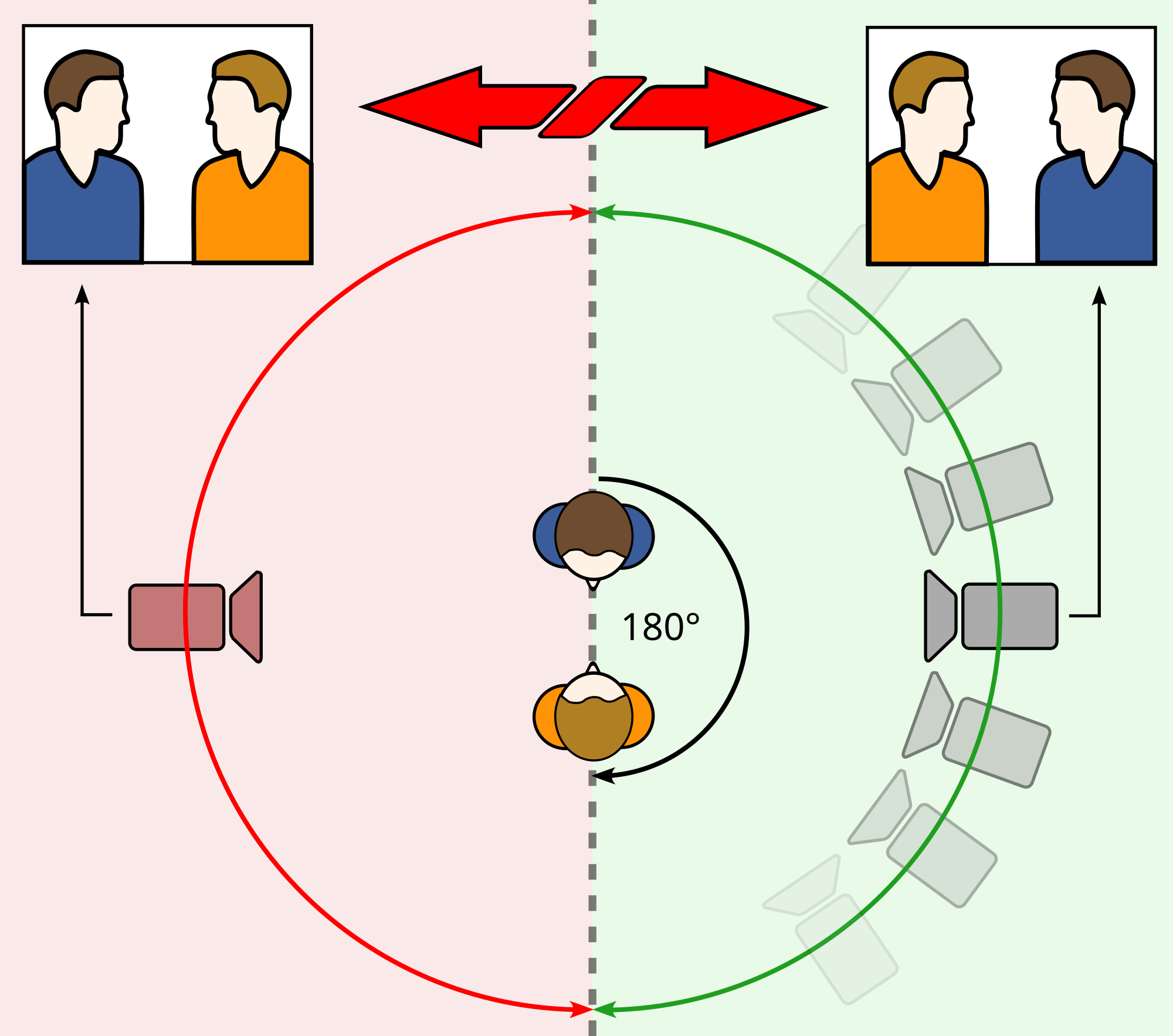
180 Rule - The 180 rule is where he all coverage should generally be shot from one side or the other of this imaginary line. The audience subconsciously forms a mental map of where the actors are located in the scene. Crossing the line while filming over the shoulder shifts the persons eye line meaning the characters would be looking different directions. The only way to cross the line without disorienting the audience is to show the camera movement.

Rule Of Thirds: The rule of thirds is a concept in video and film production in which the frame is divided into into nine imaginary sections, as illustrated on the right. This creates reference points which act as guides for framing the image.

Shot reverse shot: Shot reverse shot is a continuity editing technique used in conversations, this usually features an over the shoulder shot in which two people are speaking, this means there are multiple cuts and have to be put together in the editing process. Shot reverse shot often ties in with the 180° rule to retain continuity by not distorting the audience’s sense of location of the characters in the shots. Since the characters are shown facing in opposite directions, the viewer assumes that they are looking at each other.

Match on Action: An editing technique for continuity editing, in which one shot cuts to another shot portraying the action or subject in the first shot. This creates the impression of a sense of continuity – the action carrying through creates a “visual bridge” which draws the viewer’s attention away from slight cutting or continuity issues. This is not a graphic match or match cut, it portrays a continuous sense of the same action rather than matching two separate things. Match on action means that the scene must be filmed multiple times and then put together during editing for the scene to work.


No comments:
Post a Comment