Friday, 19 December 2014

Malevolent Phantom tutorials


Malevolent Phantom

Editing


For the initial draft edit of the opening of our film we used Sony Vegas software to edit purely because I have used it before and find it easy and comfortable to work with, also its on my laptop at home so I could edit the film outside of school. It will be good in giving us a simple, clear idea of what our project will look like all edited together and what parts we may need to re-film or change to make it look more professorial. After Christmas we may choose to re-edit it in adobe software to get a more sophisticated look to it with more developed features so I will look at tutorials for how to use that software to the best of my ability. I have used Sony Vegas for a few years now and have developed my skills whilst using it so I didn't need to watch any online tutorials on how to work it but just to refresh my memory I quickly glanced over a few tutorials to develop my skills even further and looked over the basics again (mainly the keyboard shortcut keys as it makes life a lot easier.) 


https://www.youtube.com/watch?v=Aikef3t5_Jw


This video goes over the basics and gives newbies a clear idea on how to do the most simple editing, when I first started editing this would have been helpful, so to refresh my memory on how to edit using this software was perfect.


https://www.youtube.com/watch?v=L7Y88TRRRhU


When you're editing it can be quite tiresome to keep having to use the mouse to click things and perform simple tasks when having a keyboard shortcut would be a lot easier. This video quickly sums up the basic Sony Vegas shortcuts to make editing even easier.


https://www.youtube.com/watch?v=Amjan5Xfe44


The other software we will use after Christmas to create a more professional look to our film is adobe, I have never used this software before and therefore will research into it to find out how to use it to the best of my abilities. The video above helped me to learn the basics of this adobe software so I now feel more confident in editing our film footage in it. I think between now and after Christmas it would also be helpful to learn how to do opening titles as it will create a more professional look for our film.

Representation of stereotypes


Representation of Stereotypes

Malevolent Phantom
 
In majority of horror female character are seen as the damsel in distress and usually are attacked by a killer within the opening of the movie. The common stereotypes in horror movies are dumb blondes; they are represented as an innocent, vulnerable and naïve character. The character Lucy subverts the looks of the dumb blonde however she conforms the representation as she’s easily manipulated. This character helps build suspense especially because of her behaviour.
The antagonist is represented stereotypical malevolent phantom that lurks near the main character. It preys on the protagonist until it finds the right time to attack and kill her. The appearance is unknown in the beginning of the film as it is wearing a big black coat which covers its face so they audience can’t make a connection with them. This character has a huge impact in the horror film because it strikes a fear into the audience. 

Questionaire


Age: _ 0-10  _ 11-15  _ 16-20  _ 21-30  _ 31+


Gender: _ Male  _Female


How often do you watch horror films?


What aspects of horror do you like?

Chase _

Suspense _

Darkness _

Jumpy bits _ 

Blood _

Clowns _

Other _________


What other genres do you like?

-

-

-


Why do you or do you not like horror?

-

-


How much fear do you like from horror

Hiding behind the sofa - 1 - 2 - 3 - 4 - 5 - No fear at all


Horror is the best genre

_ Strongly agree

_ Agree

_ Not sure

_ Disagree

_ Strongly disagree


What's the best setting for horror?

_ City

_ Woodlands

_ Abandoned house


Whats your favorite horror film + Why?

-

Results

0-10 = 9%  16-20 = 72%   30+ = 19%

Male = 28%  Female = 72%


45% of people said they never watch horror films which is interesting as that's almost half, but it's what I expected as personally I don't see the appeal of horror and so never watch them but I was stunned to see almost half of the people questioned felt the same. 


Interestingly it wasn't just the males who said they watched horror the most which subverts from the stereotypes that horror has a mainly male audience as a quarter of females also said they watch lots of horror films. An anomalous result was one male saying he never watched horror films (subverting from stereotypes) but another independent factor that influenced this was his age as he was only 8 and therefore the horror films were probably not age appropriate for him, unlike comedy or children's films.


The two most popular features people look for in horror films were chase and suspense, this is what i expected as they are the cliche parts of a film that make it a horror film. Blood was only said 19% of the time which surprised me as I thought more people would look for that in horror, also tension was only said 9% of the time when I thought it would be more, but it is similar to suspense, which was said 36% of the time, so maybe these two aspects were too similar - therefore for next time I would make the choices more distinguished. Chase was the most common aspect with 63% of people saying they looked for it in a horror film, this is something that we can use to our advantage and include in our film to appeal to a larger audience and make more people want to see our film.


When asked what other genres people liked, so we could include the aspects of other genres people like to create a more appealing film to a larger audience, Comedy was third most popular with 36% of people saying that was another genre they liked - this doesn't really help us as we feel it would be quite hard to incorporate a comedy aspect into our horror film, this is something we will have to consider at a later date but I feel it's something we won't end up incorporating in our film. Action was the most popular with 65% of people saying that was the other genre they liked, interestingly this was most popular with people who also liked horror suggesting they like the physical side of horror, the chase, the murders etc. This will help us when making our film as we now know to attract a larger audience we should include a physical side of things, as previously established people do like a chase scene so to optimise our films attraction to people. Romance was also a common favourite genre with 62% of people saying they also liked this genre, but this may not be relevant to us as people who said they liked romance didn't like horror so it wouldn't actually be combining the two things people love. On the other hand though we could maybe attract an audience of people who are not usually the sort who go see horror by incorporating a romance side - something they like.


Most people like either a 4/5 or 1/5 scare factor - the 1/5 was suggested by people who don't like horror and don't like being scared so probably wouldn't come see our film anyway so their results should be disregarded as we should focus on horror enthusiasts (people who will actually come to watch our film). Therefore we should maybe go for a high scare factor (4/5) to please the horror enthusiasts as although it would be good to attract a larger audience by appealing to people who don't like horror as much and want a 1/5 scare factor, in doing so we would isolate and exclude our pre-built horror enthusiast audience so I think we should entice them in other ways that don't exclude the main part of our audience. 


60% said woodlands was the best setting for horror with 40% which is interesting as we had anticipate to use woodlands as we thought it was most mysterious and, for production purposes, most accessible and easy to acheive a tense atmosphere in. As I thought 0% of people thought a City was the best setting for horror - this is probably because its far too open and too many people so it's hard to be isolated. Also, it's quite bright and open and if you film at night it may be more eerie but you'd have to find a suitable camera and you wouldn't be able to see the beauty of the city your'e in - therefore making it almost pointless to film there.


Overall this questionaire was helpful in identifying what people look for in horror and the aspects/location to include in our film.

Film Diary

Diary of filming


Film Diary


Monday 24th November:  (Arrived at 3.15pm Left at 4.30pm)


The first day we went to the woods was straight after school. We looked around the woods getting a feel for what parts were darker than others, what parts were secluded and what areas were close to safety. We started off with a few trial shots to see what angles are most effective. Our first scene was two friends walking up the roads then saying our goodbyes. Although we had to repeat this scene a few times as we couldn’t decide the best shots for when we entered the woods. We included shot reverse shot during our conversation which also took a few attempts as we were cautious of the 30 Degree Rule. We were able to film up to point where our main character Lucy had received a phone call from her Mother which was the trigger for her to take the unsafe route through the woods and the uncertainty that come along with it. We stopped filming at 4.30pm due to the drastic lighting change which causes the shots to look out of place.


Friday 28th November: (Arrived 2.35pm Left at 4.00pm)


After looking at what we had produced for Monday 24th November we discovered that filming by the side of the road was inefficient as the noise was too much, we also added another character into the story; we decided to include another friend. We did this because we wanted the audience to concentrate mainly on the friend who was on her own for them to sympathise and relate to her. Therefore we started our film again with us beginning more in the woods to eliminate any unwanted sound; this also gave us a wider range of options on to how we could expand the story. We filmed a variety of low angle and high angle shots by using trees to climb up; we were able to film up until the point where our main character Lucy starts feeling paranoid which also included the audience seeing the malevolent phantom for the first time. We could have carried on although the lighting became too dark for the camera to pick up useful footage.


Monday 1st December:  (Arrived at 4.00pm left at 4.30pm)


Due to other factors we could not get to the woods as early as we hoped, therefore our lighting was too dark than what we had initially planned, resulting in no filming being done. Although we used this opportunity to talk through what we would do at our next filming session and realised that we had to come earlier therefore we all came to the decision of filming on a weekend so the lighting would be better.


Sunday 14th December (Arrived at 9.30am Left at 11.00am)


We decided to arrive at our setting early on Sunday morning because the lighting would then be appropriate; we started filming from where we left off on Friday 28th November carrying on from our main character being nervous while the malevolent phantom was in her presence. We were unsure whether we should include a shot where we film for the protagonist point of view as some from our group felt that we should leave him as a complete mystery but we came to the decision in which we thought that following him would make the audience more empathetic towards the innocent girl. We included diegetic sounds to create suspense which was the trigger of a running scene which resulting in our main character stumbling to her knees where her preying predator dragged her off scene which ended our opening with the noise of her desperately screaming. We were able to complete the 2nd half of our film. We planned to stay till 12pm but we had finished early. All we need to do now is add some non-diegetic music over the top for emphasis as well as titles.

Sountrack research

The expression soundtrack generally refers to the music in a movie or television program, and to an album sold containing that specific music. Sometimes the music has been recorded just for the film, often but not always depending on the genre of the movie the soundtrack album will contain portions of the score, music made for dramatic effect s the movie's plot occurs. There are three different types:
- Musical film soundtrack (not relevant to our genre)
- Film scores (background music)
- Albums of pop songs heard in whole/part of non-musicals

All the different genres of film have different styles of soundtracks with different elements to them, I will analyse a few of the genres that we may pick for our film:


  • Action: usually include high energy, big budget physical stunts and chases, possibly with rescues, battles, fights, escapes, destructive crises (floods, explosions, natural disasters, fires etc.), non-stop motion, therefore a soundtrack with spectacular rhythm and pacing as well as being fast paced and having a high tempo would be suitable to carry the audience on this physical journey and to get them feeling energised like the characters. 
  • Comedy: usually light-hearted plots constantly and deliberately designed to amuse and provoke laughter by exaggerating the circumstances, the language, action, relationships and characters. For this genre the soundtrack should be more upbeat and happy to make the audience feel in a more positive mood, there shouldn't be any dramatic beats or sudden loud flashes as you don't want to make it over-serious or too scary that it turns away views. It should be a simple soundtrack that keeps the mood upbeat and shares the characters humor and joy with the audience.
  • Horror: designed to frighten and to invoke the audiences worst fears, repeatedly in a horrifying, scandalous finale while captivating and engaging the audience at the same time. From the screeching violins of Psycho to the crashing chords of Jaws, film-makers have long relied on disturbing soundtracks to heighten suspense and terror, therefore the soundtrack for this genre should have much more of a suspenseful element that draws in the audience and keeps them anxious and on the edge of their seat at all times. At less eventful moments it can be more subtle and slower but it should constantly climb and build to a moment of terror with increased tempo and volume. Loud bangs and harsh, discordant and unexpected sounds should make the audience jump and heighten their fear whilst watching the film. It's scientifically proven that he "non-linear" sounds, often created by pushing brass and wind instruments beyond their natural range by playing them too hard, exploits the human brain's natural aversion to sonics that signal fear or distress. (Noise is associated with horror and fear), abrupt frequency shifts are associated with sad dramatic scenes. To use this to my advantage I will include high pitch 'non linear' sounds to tap into humans primal fear and make the audience even more scared.

Influences of production

Influences of production  

Malevolent Phantom


During the production of the Malevolent Phantom, many things influenced our choices as to the direction of the way we wanted to take our film. A film which inspired us to go with horror as a genre was 'The Cabin in the woods'. This film uses a setting similar to our own and has the same target audience, although the plot was slightly different we felt this gave us an understanding of what to include to make our film suit the horror genre and the typical male dominated audience which would be our main focus in terms of target audience. Another film which influenced our film was 'Scream' as we used the same fear of the unknown aspect which we thought would engage our audience more with the film. In scream when a character dies it usually takes place in a remote location, this was an idea in which we imitated and used in our film Malevolent Phantom. Both films gave us different ideas and themes that we incorporated in our film to appeal and suit our audience.


The costume of the actors was not an influence from a specific film. It was an idea we saw featured in many horror films, this where the antagonist where dark colours to camouflage into the darkness. Films such as scream use a the antagonist with a black costume as this emphasises that the identity of the antagonist is hidden and increases the tension and makes the audience more fearful. The costume of the protagonist wearing a bright light coat was to show the innocence of the character and make her stand out from other characters, this was not really an influence from a film but rather a decision we all felt was necessary to give the protagonist most prevalence the shot.


As a group we thought of many settings which all were similar as they were in a remote location, this idea we was influenced by other horror films which always feature a remote location as the setting. This type of setting creates tension and hints that something will happen. The audience are always left not knowing what is going to happen as this presents a mystery as its unknown and usually deserted. As the setting does not contain other people this means when the victim dies, no one be there to hear the screams.


The characters we hope to include will be the stereotypically innocent young girl who finds herself trapped in a dangerous situation which she will regret. She comes with the not so stereotypical antagonist whose identity is unknown and is known as the Malevolent phantom. The young girl stereotype has been influenced from a number of films, this is a major connotation of the horror genre.


Tuesday, 16 December 2014

Certificate Research


Certificate Research

U:
 Suitable for audiences aged four years and over
 At U we only allow infrequent use of very mild bad language (e.g. ‘damn’ and ‘hell’).
 Characters may be seen kissing or cuddling and there may be references to sexual behaviour
 Violence will generally be very mild. A U film may include brief fight scenes or moments where characters are placed in danger.
 ‘Baddie’ characters may carry or use weapons, but there will be no emphasis on these.
 E.g. Curious George, The Bee Movie


PG:
 PG stands for Parental Guidance
 A PG film should not unsettle a child aged around eight or older
 A PG film will not contain any theme which is inappropriate for a child. PG works can explore challenging issues such as
bullying, bereavement or racism.
 There may be mild bad language (such as ‘shit’ or ‘son of a bitch’)
 Sex references are unlikely unless they are undetailed and infrequent.
 Violence will usually be mild.
 E.g. Saving Mr. Banks, Shrek


12A
 12 contain material that is not generally suitable for children aged under 12
 The 12A requires an adult to accompany any child under 12 seeing a 12A film at the cinema
 The BBFC's Guidelines state that strong language (e.g. 'fuck') may be passed at 12 or 12A (Non Aggressive)
 Moderate language (e.g. uses of terms such as ‘bitch’ and ‘twat’ at 12 or 12A).
 Sex may be briefly and discreetly portrayed at 12A or 12. Verbal sex references should not go beyond what is suitable for
young teenagers also there may be nudity
 At 12A, moderate violence is allowed but it should not dwell on detail. There should be no emphasis on injuries or blood,
 Some horror films are passed at this category. Moderate physical and psychological threat is permitted at 12A or 12A.
 E.g. Hancock, The Switch


15:
 Strong violence
 Frequent strong language (e.g. 'fuck). Occasionally there may be uses of the strongest terms (e.g. 'c***'),
 Portrayals of sexual activity
 Strong verbal references to sex
 Sexual nudity
 Brief scenes of sexual violence or verbal references to sexual violence
 Discriminatory language or behaviour
 Drug taking
 E.g. 21 Jump Street, Bridesmaids


18:
 Very strong violence
 Frequent strong language (e.g. 'fuck’) and / or very strong language (e.g. ‘c***’), There is no limit
 Strong portrayals of sexual activity
 Scenes of sexual violence
 Strong horror
 Strong blood and gore
 Real sex (in some circumstances)
 Discriminatory language and behaviour
 E.g. Taken, Kill Bill


Considering all the features of each certificate we have decided our film is a 15 as it will contain some use of strong
language, although there will be no sexual  activity we still feel  is should be classed as a 15 as that’s the  most
appropriate seen as it may effect a 12 year old.

Shot types

shot types

In the opening scene for 'Malevolent Phantom' we used many shots to show the setting and emphasise the characters feelings. The variety of shots allowed us to capture the moments in the scene from different angle which let us portray different aspects of our scene.


High shot - We plan to use this shot a lot to show the loneliness of our character and have the audience emphasis and feel sympathy for 'Lucy' our main character who is alone in the woods. This shot will show the remote setting we plan to use which is the woods.


Medium shot - This shot we will use to track 'Lucy' on her journey and also as the 3 characters say their goodbyes, this shot will show how the group are close together and are safe however as 'Lucy' ventures off on her, the shot will change into high shots to show she is alone in unknown territory.


Over the shoulder shot - This shot will be used for the conversation with the three girls at the beginning to create a realistic effect and get the audience to feel like they are present in the world of the film. Also it will be used when the 'Malevolent Phantom' is preying on 'Lucy' to show that she is being followed and is in danger


Low angle shot - This shot will be used to show the strength and power of the malevolent phantom, we will use this when the creature is watching 'Lucy' walk past, this will show it to be over powering and seem stronger than Lucy.


Long shot - This shot will be used to show more of the setting and show lucy walking through the woods, which will show her slowly getting closer and closer to danger which lurks in the trees.


establishing  shot - This shot would be used to show the setting of the woods, however we may not be able to do this as this could involve a high angle.


Saturday, 6 December 2014

Malevolent Phantom Film Brief

Film Brief
Malevolent Phantom


People are being followed home late at night, targeted when they are alone and frightened -  and there's good reason for that fear. A serial killer is on the lose and destroying peoples lives across the country, having slipped out of America and come across the pond he seems adamant on picking people out and providing them with a gruesome death. With a mysterious background and an ever growing list of the dead do you choose to run and hide from this malevolent phantom or instead get to the bottom of why all these innocent people have been brutally murdered. As innocent Lucy wanders alone through the woods there's a rustle in the trees, but why is she being targeted? With more and more stories of murders dominating the news has Lucy gone too far to get to the bottom of it all and will her name be added to the list of the dead. Is there more to this story than first meets the eye and are these people really innocent at all?


Overview:
The story centers on a young girl called Lucy (16) who is being targeted by this malevolent phantom, the start of the film is her lonely walk through the woods where she is grabbed by this creature before it then flashes back 48 hours.  The audience then spend the majority of the film living this 48 hours with her and finding out about this malevolent phantom, Lucy's background and all the victims this malevolent phantom has already claimed. As the film progresses you learn more and more about this malevolent phantom and how all the people he targeted may have a fundamental link between them and may not be so innocent after all.

Malevolent Phantom Script

Malevolent Phantom
Script

[road noise, cars passing by - contradicted by silence of location the characters are now in, only the sound of tweeting birds and their feet walking]

L: Yeah so that was really good fun wasn't it
R: [overlapping] Yeah that was really good
L: Yeah so we're doing cinema tomorrow night aren't we
A: [overlapping] Yeah
L: Yeah right, see you then,then
[hugging goodbye]
R: Bye
A: Bye
L: Right See you
[sound of footsteps walking away - distant sound of traffic and civilisation]
L: [heavy breathing as music tempo rises, cut off by sound of phone ringing]
Oh hi mum 
[pause to hear response from caller]
Oh what you want me home now?! uuh [looking around, unsure what to do and annoyed by the information given to them] Okay [looks around, chooses woodlands path instead of road] Right well I'll be home in a minute, Okay [angered/anxious tone in her voice] See you
[sound of footsteps as Lucy walks away, sound of piece of paper hitting the ground]
L: uuh 
[sound of creatures footsteps as he turns to walk and follow Lucy]
L: [heavy breathing as MV appears to be following her]
[footsteps, rustling of leaves, as MV gets closer footsteps increase in pace until she's running at full pace, pauses for breath as she believes she has out run him]
L: [loud scream as MV grabs her]

This is a rough outline of what our script will be, as production continues we may choose to add or remove certain bits of dialogue or add more sound effects depending on whether we feel it creates enough suspense and is scary enough.

Target Audience

Target audience
Malevolent phantom


The horror genre is usually focused and aimed at men, this is because men seek thrill and excitement from films and this need is fulfilled in this genre. Women on the other hand prefer a journey and a intense deep plot which they can focus on and immerse themselves into. Our film 'Malevolent Phantom' should, and will satisfy both genders, including the emotional softer side in which the female audience emphasises with and also the gritty, tense horror in which is expected my predominately men who watch this genre.

For our film we aim to certificate it a '15', this is because we feel we can appeal to many people at different ages giving us a vast and large audience.. As you can see the statistics above are for a film similar to ours called ‘The Cabin in the Woods’. We have chosen to compare with this film as with believe this is quite like ours and we will be aiming our film at 15-34 years old. The cabin in the woods is of the horror genre just like our film and includes lots of similar concepts. As it is a horror we will be aiming mainly at the male audience as 61% of our audience will be male therefore we hope to use a gripping plot to attract our male audience. 

Location Research

Malevolent Phantom
Locations


The Woods - Most horror films are set in the woods especially because the darkness and enclosed feeling to make the audience experience the frightened feeling. The trees give it a creepy effect as the antagonist could be hiding behind the large tree so the protagonist can’t sense danger. The fog is a great camouflage because it gives a chilling feeling and the antagonist identity can’t be seen easily.  This location is popular in horror movies because the protagonist can’t escape the area easily and it will be harder for the character to find help within the woods. The low-key lightning gives a sinister effect because the antagonist will be following the protagonist until it finds the right time to get the main character.


 Abandoned Building - Abandoned buildings are great for horror movies because the plot will likely be about past hidden past; they are located in an isolated place. This creates tension because they are alone and usually it’s set at night. Horror movies tend to use this idea as it features an aspect of 'Fear of the unknown', This enhances the fear as the audience does not know what to expect. We hope to feature this element in our film.


A Remote Cottage  - A remote location would be best suited to a horror film as, in the film there would be know one around, the feeling of loneliness when in need of help would be the most daunting feeling of the characters. This setting is typical of the horror genre as it usually where most deaths take place. This would engage the audience with the plot and make them feel amerced in the film. The setting will increase tension as the threat is usually unknown by the characters and the audience.


Institution research

Institution Research
Twentieth Century Fox Film is one of the six major American film studios. The company was formed on 31 1935. Twentieth Century Fox distributes various commercially successful films such as Avatar, Stars Wars. The majority of popular films that they have created are comedy and family for example Alvin the Chipmunks, Diary of the Wimpy Kid. They prefer to make these film genre as it’s most profitable however when it comes to horror movies they distribute it rather than producing them because they’re not specialized.  They have also created some horror movies such as The Omen and Jennifer’s Body. As they are a large corporation they have made a worldwide gross of $31,556,061 by distributing Jennifer’s Body, the film was particularly males aged 17 however it earned a disappointing $2.8 million on its opening Friday and $6.8 million on the opening weekend at North American box office. As we’re producing an opening scene to a horror film, the 20th Century Fox is suitable institution which can distribute the film however as they’re only good at distributing   the film we may look elsewhere.

Lionsgate is a Canadian-American film production and distribution studio and a division of Lions Gate Entertainment. It’s the largest and most successful mini-major film studio in North America. They produce and distribute motion pictures, TV programming, home entertainment and family entertainment. Majority of their films are similar genre and the genres they produce/distribute are Drama, Action and Thriller. Liongate has some of the best horror films in the decade; these include Saw, The Last Exorcism, and My Bloody Valentine. Its first major box office was American Psycho; it earned $4,961,015 (USA) and £749,526 (UK) in the opening weekend. After researching horror films from Lionsgate I have found that they are not specialized on the horror genre because they mainly focus on Drama, Thriller and Action.

Hammer Film Productions is a company founded in 1934 which based in the UK. It is known for a series of gothic horror films produced in the mid-1950s until 1970s. During the late 1960s and 1970s there was intense competition in the horror film market which causes the institution closing down in 1980s. The company then in 2000 announced plans to being making film again but they weren’t produced until 2007. Their well knows films are The Curse of Frankenstein, Dracula, The Mummy and The Phantom of the Opera. They have also produced the feature film Let Me In and The Woman in Black. During the opening weekend, the Woman in Black earned $20 million which was the biggest US opening for the production in their history. It was put second place in the box office behind Chronicle; the film became the highest grossing British horror film in 20 years earning $127,730,736.  I think that Hammer Films suitable intuition for our film because they have the best experience with creating horror films. They are an independent film company so it would be cheaper to produce the film as they’re specialised in this area.

Blumhouse Productions is an American movie production company, founder and run by Jason Blum. It produces micro and low-budget genre movies like the Paranormal Activity, Insidious and Sinister franchises. The company produces these movies independently and release them through the studio system. Blumhouse has a first-look deal with Universal Pictures. Paranormal Activity grossed over $193 million worldwide when Paramount Picture released it. The partnership with Universal Studies allows Blumhouse Production gain more profit when their budget was only $15,000. The Blumhouse production makes different film genres and their horror film is popular however I don’t think this institution is great because they haven’t released many horror film and the theme of their films aren’t very broad; paranormal activities has similar plot line in their prequels.

Wednesday, 3 December 2014

Costume Research

Costumes


Costume of the protagonist: The protagonist will be wearing something that makes her stand out from the other characters, this could be many different things such as a coat or a scarf. We hope to use a red piece of clothing so it hints to the audience that something bad might happen and foreshadows future events. The red colour would stand out in the darkness and creates a sinister effect. Other characters which are in the same scene will be wearing neutral colours so the audience can tell that 'Lucy' is the main character.

Costume of the antagonist: The antagonist's costume will be very straight forward, the clothes will be black all black which means it wont be seen easily. The black colour will blend in with the darkness, which in turn will create more fear and tension. The antagonist will be wearing a hood which covers their face to keep their identity hidden. What influenced us to have this was films like scream, where the identity is hidden from the audience and the characters, and creates suspense through the whole film.

Research and Planning Targets

Make sure that you are video blogging and evidencing every part of your planning and filming (which needs to be complete by the end of term). If you can add to or evidence a few more openings that would be even more impressive. Delegate tasks to your group members and evidence your time management. A fantastic effort so far!

Costume and Props planning


Costume and props

In our film our characters are wearing different clothing to show the importance of a specific character called ‘Lucy’ played by our talented actress Chloe Hicks. Chloe was wearing black jeans, black shoes, and a vibrant coloured button coat. The coat was a black and pink checked coat, we chose this so it would stand out from the other character and show the audience that she is the main character and focus of the scene. The other character 'Amelia' was wearing plain and simple clothing, to show she was less important than ‘Lucy’.

The main and only prop that was used was the girl’s phone, in which the mother calls to tell her to hurry home. This then panics ‘Lucy’ and has no choice but to venture through the woods. The phone adds tension to the scene as ‘Lucy’ is forced to go into the woods. 'Lucy' is looking around deciding which way to go feeling cold and worried a call comes through to break the tension. This amerces the audience as they feel like they are 'Lucy' and therefore empathise with her as she has to take the dreaded walk through the woods.

Moon Board (Malevolent Phantom)

Here we complied a collection of images to do with our opening two minutes, the main image is of a woodlands - our setting, looking dark and mysterious and conforming to horror stereotypes. There's two separate images of a man lurking in the woods creating suspicion and tension as we don't know who he is - this represents our malevolent phantom. He is mysterious and creepy, hiding in the back of shots and stalking our innocent main character - Lucy.

Our main character will wear a colourful coat to connote interest and show the main character to be more vibrant than the other characters who are of less importance. The malevolent phantom on the other hand will wear a big, dark, black coat to hide under and to almost blend into the background of the woods so he is not as noticeable. He could also possibly be wearing a balaclava to cover his face and hide his identity even further.

A long shot of a person in the woods, all alone shows that our character will end up alone in the woods, surrounded by only darkness and lurking somewhere is the malevolent phantom - this builds suspense and links to the other picture 'suspense'. One of the main parts of horror we hope to achieve is suspense, making the audience scarred, feeling like this is actually happening to them.

A low battery picture shows that as Lucy's phone dies she is left alone and isolated in the woods (a key factor of horror) with no way of contacting people and is therefore truly alone in the woods. This makes the audience nervous and scared for her as they worry whether she will be killed by the malevolent phantom.

Saturday, 22 November 2014

Initial ideas

Initial ideas


Our first main idea we thought of was a Zombie apocalypse theme, we thought the horror aspect would work well and this was the direction we wanted to take our film. However after much consideration we decided this wasn't the best idea as it would be hard to get the props and costumes for this particular opening. The Zombie theme would of been set in the initial outbreak where the world is in chaos, we thought this may work as we thought we could build suspense and tension with quick pace editing and little dialogue.

Our second idea was of the comedy genre, however we soon realised that this wouldn't work as we would have to use a broad type of humour that relates to a large audience. The comedy aspect wouldn't work as we would need to have a very funny interesting opening which would of been hard to produce with the little equipment that we have.

After deciding the zombie theme wasn't the best idea and the comedy genre wouldn't work, we started looking at other genres such as and action, however we decided to go back down the horror route again. This lead us to thinking of a 'fear of the unknown' theme as we believed this would engage the audience and entice them into the film. The plot for this would be a helpless girl walking in the woods and is being preyed on by a 'Malevolent Phantom'. We decided this was the best idea and have made this our final idea. We thought we could use the setting of a woods to emphasise the horror and add to the mystery, the woods will have poor lighting which will add to the tension. With this theme we let the audience use their imagination and from this it emphasises the horror for the audience.


Wednesday, 19 November 2014

Research Feedback

A fantastic effort so far with theoretical and detailed responses to media texts. Be sure to begin to document every stage of your planning towards your film now – use technical terminology and take us on a journey to completion of your film project. Well done!

Sunday, 9 November 2014

Film Brief

Malevolent phantom


Overview of the film - People are being followed home late at night, targeted when they are alone and frightened. A serial killer is on the lose and destroying peoples lives across the country, having slipped out of America and is adamant on picking people out and providing them with a gruesome death. With a mysterious background and an ever growing list of the dead do you choose to run and hide from this malevolent phantom or instead get to the bottom of this horrific crime. Is there more to this story than what meets the eye and are these people actually innocent at all.


The genre of our film is going to be horror as we feel we can create more of an impact with this genre and create suspense making the audience engage with the film. We plan to film the scene in the woods as this follows the horror genre and also we can use the setting for effect. One of our main focuses is 'fear of the unknown' which entices the audience as they want to find out the identity of the mysterious figure. We believe that the audience would be more engaged and also hooked wanting to find out more.


The plot will follow the pattern of a alone girl in a remote setting being preyed on by a mysterious figure creating fear within the audience. Two girls are returning from a night out and part ways to go home, the girl who s the main focus of the scene will be venturing through the woods which is a quicker journey than the twisted roads which she doesn't know too well. A call comes through, its her mum telling her to hurry home so she decides to go through the woods. Its dark, she can barley see so she has her phone out, when all of a sudden she realises her battery is about to die. This makes her more on edge and makes her more scared. She tries to rush through however in the scuffle she drops her phone, bending down to pick it up the audience see a 'malevolent phantom' in the distance in which she is completely oblivious of. The girl gets back up and carry's on walking, she starts to hear rustling from the bushes which makes her more uncomfortable. the young girl is terrified which attracts the audience and engages them with the scene. As the girl walks the phantom gets closer and closer until he grabs her leaving the scene on a cliffhanger of a very disturbing sound of her screaming leaving the audience to imagine what has happened to her.


The scene will use a variety of camera shots from the high shot of her entering the woods establishing abit of a setting, to a medium shot of when she is walking. Close up shots will also be used to highlight the characters facial expressions and create suspense and also show the fear in which the girl has. We will use long shots of the girl walking to suggest a long journey in which anything could happen also the long shots would feature a malevolent phantom in the distance which she is not aware of. During the conversation at the beginning with the two girls we plan to use shot reverse shot which will show both characters emotions and create more of a realistic aspect to the scene. Also many high shots will be used to emphasise how vulnerable she is and show her to be a weaker character in the scene.


The music we use will nicely complement the tense atmosphere of the scene in order to build suspense and use the 'fear of the unknown' aspect to our advantage. We may start with a calmer type of non diegetic sound at the beginning but as she enter the woods have a more sinister type of sound  to show a change of mood within the scene. We will be using diegetic sound such as, dialogue from the characters and the sound of bushes rustling, the wind which will build on the tension already in the scene.


The clothing in which the girl wears will be more obvious to the audience as she will wear a piece of clothing that will stand out so the audience know this is the main character. Also the lighting is important to show the setting and the character so we will be using different type of lighting to reflect the mood of that part of the scene.


Filming Contunuity


Filming Continuity

Continuity editing is a system of cutting which is used to maintain continuous and clear narrative action by following certain rules. If they didn't follow the rules the scene would look unnatural and static. If the director breaks continuity the audience would get confused as the scene wouldn't  make sense. The rules of continuity must be followed to maintain continuous and clear narrative.

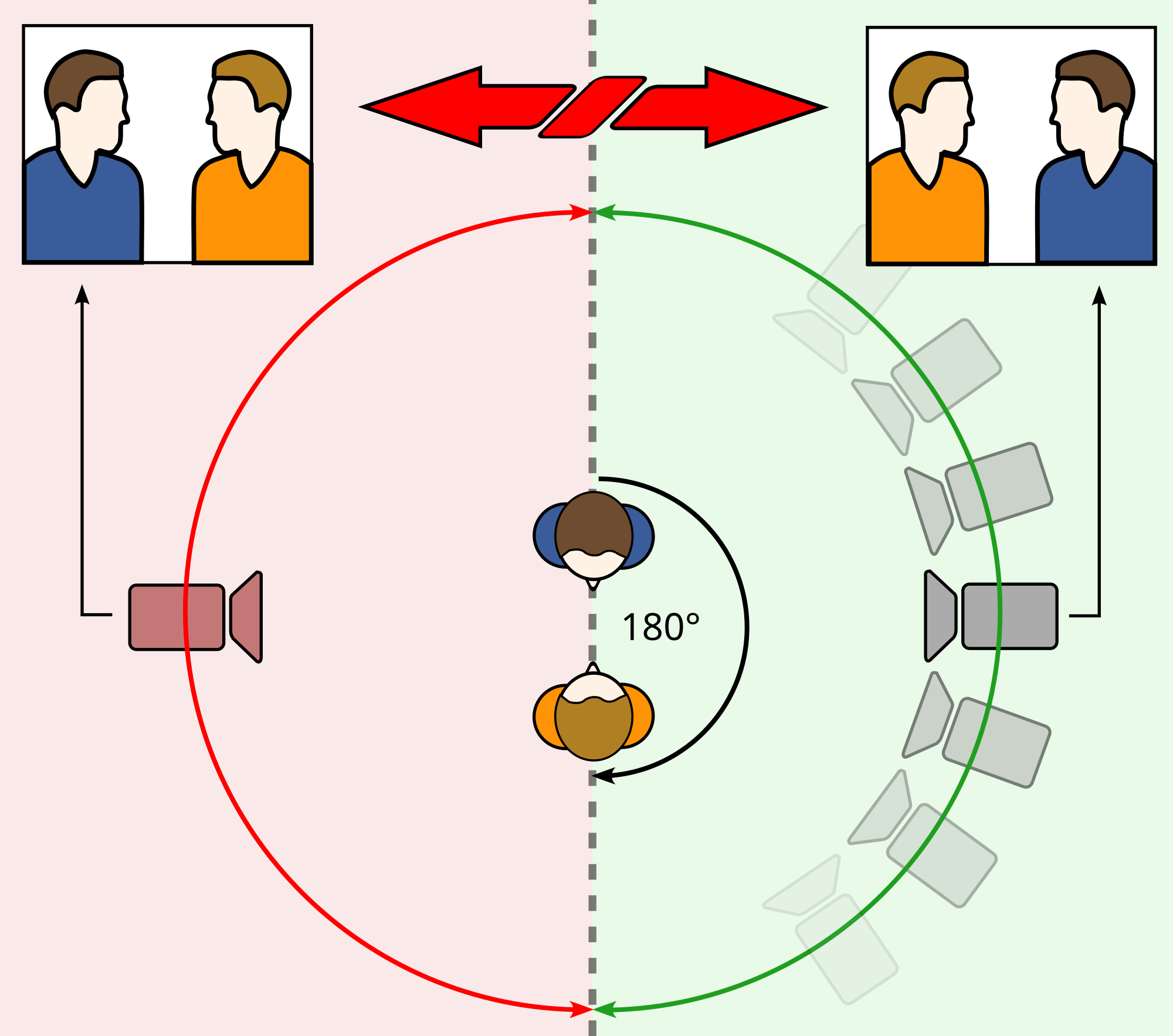
180 Rule - The 180 rule is where he all coverage should generally be shot from one side or the other of this imaginary line. The audience subconsciously forms a mental map of where the actors are located in the scene. Crossing the line while filming over the shoulder shifts the persons eye line meaning the characters would be looking different directions. The only way to cross the line without disorienting the audience is to show the camera movement.


The 30º Rule: The camera should move at least 30° between each shot of the same subject. For example a shot reverse shot scene would fulfill this. With the 30º rule the angle between any two consecutive shots should not be less than 30º, in order to maintain spatial relationships between people and objects in any given sequence of shots.


Rule Of Thirds: The rule of thirds is a concept in video and film production in which the frame is divided into into nine imaginary sections, as illustrated on the right. This creates reference points which act as guides for framing the image.


Shot reverse shot: Shot reverse shot is a continuity editing technique used in conversations, this usually features an over the shoulder shot in which two people are speaking, this means there are multiple cuts and have to be put together in the editing process. Shot reverse shot often ties in with the 180° rule to retain continuity by not distorting the audience’s sense of location of the characters in the shots. Since the characters are shown facing in opposite directions, the viewer assumes that they are looking at each other.


Match on Action: An editing technique for continuity editing, in which one shot cuts to another shot portraying the action or subject in the first shot.  This creates the impression of a sense of continuity – the action carrying through creates a “visual bridge” which draws the viewer’s attention away from slight cutting or continuity issues. This is not a graphic match or match cut, it portrays a continuous sense of the same action rather than matching two separate things. Match on action means that the scene must be filmed multiple times and then put together during editing for the scene to work.


Sunday, 2 November 2014

The Expendables Opening Scene Analysis

The Expendables

Use of Camera: The scene is introduced by using a long shot of a village showing the setting and giving the audience an idea of where about it is set. The team then set off, leading to a medium shot of the truck they are in, this shows the guns and armor, suggesting that a battle is about to commence. The trucks then push through the village. The camera then changes into a medium shot as they open fire, showing the body's being hit by the bullets and the blood exploding everywhere, typical of the action genre. This excites the audience of mainly men and satisfies their needs to see big explosions and lots of deaths. This then moves on to a medium shot of Jason Statham behind one of the heavy machine guns, this shows him to be quite ruthless and not phased by killing lots of people, also it emphasises the genre and has a big impact on the mood of the scene. as the men burst through the gate, the camera is a low shot showing the gate fly towards the camera and crush two men, this shows the the team to be powerful and strong and better trained than the foreign henchman. the scene then continues in a medium shot, occasionally cutting to a close up of one of the elite teams face. The scene then cuts to an inside building showing a few baddies guarding a hostage who hear the gun shots and explosions but are oblivious to what the threat is. It also shows them to be less armed than the protagonists outside, which suggests that they are weaker and not as intelligent as the good guys. The guys then shut the door thinking it would protect them from the carnage outside.

Sound: Non diegetic music opens the scene which is quite patriotic suggesting a battle or war is about to happen. The trucks engine roaring fuels the audience's drive and gets them ready for what follows. The men enter the village with diegetic sounds of villagers screaming as they know what is about to happen. Diegetic tires screeching as the van skids around and the men let of a round of gun fire, this introduces the audience into a fast paced massacre in which they suspire. The scene then continues with more gun fire which builds on the audiences excitement and makes them thirsty for more. Explosions which thrill the audience are used throughout the scene. 

Narrative: The scene starts with the men racing though the village armed for a war, this excites the audience as they know what is about to follow. The men then open fire on the unprepared army situated in the village causing absolute chaos. The reason as to why they are there has not been revealed to the audience yet, however the audience are less interested in the plot and more focused on the the guns, explosions and brutal deaths. The scene swiftly moves on to a group of the foreign army in a building holding hostages, suggesting that's why the team are here, to retrieve the hostages from them. This is a classic plot line for an action film to have a group of well armed guys fight an entire army and risk there lives to retrieve something of theirs in which the enemy has taken. The opening scene doesn't hint what the rest of the plot is going to be about, however from the amount of gunfire and outrageous stunts the audience can expect more from the remainder of the film. 

Genre: Group of well armed men making there way to a remote village can only mean one thing, a big budget blockbuster action movie. There are many indicators that this is an action movie such as the non diegetic music which makes the scene more dramatic and hints that something is going to happen. Another major indicator that this is an action film is the amount of guns and an explosions there are. Guns connote danger and war in which death occurs, which could foreshadow what might happen. The foreign army are all main conventions of the action genre and are usually will be from the middle east. The editing of the scene also indicate the genre as it is very quick and snappy which gives the audience the non stop action they crave.

The Dark Knight Opening Scene

The Dark Night


Use of Camera: The scene starts with a medium shot of a 'goon' pointing a gun out the window, this shows the audience that there is going to be some sort of action sequence which follows. The camera then cuts to a medium shot of a man in the middle of the town, it then zooms in onto the mask he is carrying. This creates an image of the clown masks face which will last and linger in the audience's mind which will generate fear from the disturbed image. The scene continues and the camera changes to a Birdseye view shot of two of the men zip lining across buildings, this increases the thrill as the audience are uncertain of what is going to happen next. Also this shot shows the setting giving the audience an understanding of what sort of heist is taking place. As the men are making their way into the bank, the camera is a low medium shot showing that these thugs are powerful and quite dangerous. The camera is focused on one of the men which is the same guy from earlier, we can tell this by his mask which shows that he is an important character or has a crucial roll in this job. The men then start taking hostages, the camera is of a medium shot showing the a man putting grenades in the hostage's hands this enhances the tenseness and creates uneasiness within the audience. The next scene the camera is a medium shot of the last thug walking towards the helpless hostage on the floor this then changes to a close up of the hostages face showing terror and creating a foreboding sense. The camera then cuts back to the thug where he takes of his mask and reveals himself to the audience. The audience then realise that this is the joker who was not supposed to be there. The way the camera is zoomed in on his face shows the unpleasant and the disturbing make up which makes him the more fearful and empathises the danger of the character.

Sound: The scene opens with the use of non diegetic music to set a dramatic tone to the scene, this gives the audience an understanding of what it might be about. Gun shots and smashed windows emphasis the use of violence and which implies that the men are criminals and the 'baddies' of the film. Swiftly moving on to a shot with the most important character of the scene who has most prevalence in the whole scene, we hear dietetic sounds of  local commuting cut off by screeching tires, this increases the thrill and just adds to the layer of apprehension of the scene. The guys then climb out the window and zip lines across, this is where the non diegetic music becomes louder and is more obvious. This changes the mood and increases the intensity as it is building up to what is going to happen. More gunshots are used however this time it is used to scare the people and alert them of the baddies presence, this keeps the audience on the edge of their seat as the suspense builds. Diegetic dialogue is used to create horror, the men's voices are very comic like and cliche relating to the idea that it is based on the comics. Moving onto to the vault, more diegetic sound is used to show the high tech machinery they have, suggesting they are intelligent as it is all planned out. Also the locking mechanisms on the vault itself show the high level of security of the bank and it takes professionals who know what they are doing to unlock it. The last two guys are left and a comedic aspect is introduced as the guy says "what bus driver" and ironically the bus crashes through the building crushing him. The last part of the scene uses non diegetic sound to create a dramatic reveal to the audience, which makes the audience shocked as they didn't expect it.

Narrative: The scene starts with masked men setting up equipment for what looks like a big heist, this gives the audience an idea of what is going to happen. The camera mainly focuses on one man, making the audience realise that this is an important character, he is later revealed to be the joker, the master mind behind the bank job. Usually a film of the action genre would start with the protagonist in a chase or gun fight however this features the 'baddies' with the hero no where to be seen. The men then start to steal money from the bank and once each of their particular job is done, their buddy shoots them until we are left with one man, the joker. This shows that these are dangerous men and are not phased by killing, this is quite selfish and brutal and portrays the joker as a ruthless, violent character that he is. The scene finishes with the joker leaving the bank alone, giving the audience an idea of who the joker is and the danger that comes with his name. As this is a the second in the dark night trilogy it would already have an established audience who know the Batman story therefore the director didn't feel that there was need for the protagonist being in the opening scene.

Genre: The film opens and throws the audience into a fast paced heist which excites them and creates tension, this is a typical type of opening for an action film to do. There are many of aspects of the opening that hint that this is an action film such as the non diegetic fast pace music which is used to create suspense, this music makes it feel like it is building up to something. Much of the mise on scene also indicates that it is an action film such as the guns which connote death and pain which could foreshadow future events. The masks that the men are wearing create a disturbing image for the audience and increases the thrill factor. From this scene the audience get an understanding of the main villain who will be the main focus for Batman. However still leaves the audience asking lots of questions such as why is the joker so ruthless? and where is batman?, all which will be answered in the remainder of the film,
hooking the audience and making them watch more.

Friday, 31 October 2014

The Notebook Opening Scene


The Notebook


Use Of Camera: The scene starts with a establishing shot of a person on a boat in the lake, this sets a sweet romantic tone to the scene and makes the audience relate to it. As it is an establishing shot it shows the setting of the sunset which indicates it is a romance film. The shot then cuts to a long shot of the boat with the main focus on the sunset, the whole frame is tinted red which suggest passion and emotion which are main connotations of the romance genre. The shot creates a peaceful tone and creates a very relaxing picture for the audience. The way the camera is focused on the sun expresses a amorous, nostalgic effect making the audience emphasise with the moment and imagine what the film is going to be about. The shot then cuts to a medium shot following the boat, in the boat the audience can see a figure which looks like a man, creating a mystery and makes the audience wonder who it is. The camera then changes to another medium shot from the side showing the ripples in the water, this shows the pureness and expresses a natural side of love in which this film could focus on. The scene then carry's on until we see a woman looking out the window at the boat, this is the only other character in the scene which could suggest the film is going to be focused on their love.

Sound: The scene starts with non diegetic music which creates a peaceful atmosphere, this is the only sound we hear for the whole scene. This enhances the mood as it makes the audience feel that they are on this calming journey of love as the person rows down the stream. This creates a sense of innocence and the picture that is being painted is really natural and pure. The way non diegetic sound is used is it compliments the rest of the scene nicely as it creates a harmonious effect. The reason the director has used non diegetic sound is to attract the audience and invite into this classic, simple scene. The non diegetic sound also refers to the genre as the naturalistic way the scene has unfolded is a clear indicator of the romance genre.

Narrative: The scene doesn't give the audience much of an idea of what the film could be about, however from the scene the audience can start to question who the person is on the boat. As the boat is following a long stream it could suggest that the film is going to be about a journey following a couple through their whole lives, this gives the audience an understanding of what the film could be about. The way the shot is tinted red could suggest emotion as the colour red connotes passion and love. These two aspects could refer to what the film is going to be about.

Genre: There are many indicators that this is of the romance genre the main one being the sunset which portrays a romantic, passionate aspect of the scene. The setting connotes romance as it uses a sunset which typically is used in romance films. The non diegetic music indicates that it is a romance film as it is calm and peaceful making the audience feel happy and content. The idea of the boat rowing down the lake connotes romance and love and attracts the audience into the film.

Dear John Opening Scene

Dear John

Use of Camera: The scene starts with a high shot of the main protagonist, from this angle the audience can see that he is injured, this makes the audience feel sympathy for him as he is seen as weak as the camera is looking down on him. The camera then cuts to a medium shot of John as a young boy, showing him happy, which is a contrast from the moment he's in at the moment. This flashback shows the audience, him as a young boy at a coin factory. The camera then cuts back to him being injured with a extreme close shot of his eyes, this shows him to be dazed and not in control. The camera then changes to another soldier which is a low shot looking through the main protagonists eyes, this angle shows him to have authority as he is above john and is shouting at him. Also with the close up the audience can see the terror on his face showing the brutal situation they are in. The camera then keeps cutting between the flashback and the present moment showing john to be helpless as the last shot is a high shot of him lying on the floor. This suggests to the audience that he is vulnerable and not the strong brave soldier in which you'd expect. The last shot makes the audience emphasise with john as the audience feel sympathy for him and this entices the audience to watch more.

Sound: Before the scene starts there is non diegetic music which creates a sense of sadness and suggests to the audience that the scene will have an upsetting aspect to it. Then scene then moves on to the music being interrupted by a non diegetic voice over, the voice is of the main protagonist telling the audience what he was thinking when he was shot. As the voice over carry's on, the melancholy music is still present, this enhances the mood and attracts the audience more into the film. The scene then cuts to a flashback with diegetic sound of coins falling, however this could reflect on the situation he is in as the coins falling and hitting the ground sounds like bullet cartridges falling in gunfire. The scene then keeps cutting between the flashback and the present moment, the audience can hear the diegetic sound of war and destruction showing how bad and brutal the situation is for him. Near the end of the scene John says that the last thing that entered his mind was "you" which creates a mystery as the audience is left wondering who he is speaking about. The use of the non diegetic sounds intensifys the atmosphere of the scene and nicely compliments the diegetic sound of the war which creates a sense of realism and lets the audience picture themselves there.

Narrative: The scene starts with a soldier injured who the audience assumes is the main character as the scene is mainly focused on him. The scene in then introduced to a voice over of the main character explaining what has happened, this captures the audiences attention as they start to understand and realise that he has been shot and start to feel compassionate for him. The scene then cuts to a flashback which shows the main protagonist John as young boy at a coin factory which shows a contrast in the situation he is in. It then cuts back to the war in which we see him lying helpless and it makes the audience start to wonder what is going to happen and if hes going to be okay. The story focuses on a soldier who is speaking to a loved one in a voice over  and we are seeing the events of the past in which he is speaking about. Also the title 'Dear John' suggests that it is going to be about a soldier as it sounds like a letter from a loved one. The audience is left wondering who he is speaking to, this attracts the audience to watch more to find out who.

Genre: The film is of the romance genre and has many indicators such as the helpless soldier, making the audience ephasise more with the character, also the sad music indicates that it is a romance film as it enhances the sad nature and makes the audience connect with the character. The way the title is used suggests it is a letter and could be a letter from a loved one writing to John who is fighting for his country. In the romance genre there usually is a dominant brave man which is clearly shown as he is a soldier in war. Stereo typically soldiers are strong and brave and are usually the main protagonist in a romance film as the role shows authority. Romance films are aimed at young women as it makes them wish for a man who is courageous and heroic like John.